


If your patio, pergola, or covered outdoor space gets direct sun in Sacramento, you already know the problem.
By 10am in July, it’s unusable. You spent money on outdoor furniture that’s now sitting in the sun collecting heat. Your guests end up inside. The whole point of having outdoor space is gone until the evening.
Exterior shades fix that. But once you start shopping, you hit a fork in the road: motorized or manual?
This guide is written specifically for Sacramento homeowners — because our climate, wind patterns, and how we actually use our outdoor spaces make this decision more important than most people realize.

What Are Exterior Shades?
Exterior shades (also called outdoor roller shades, solar shades, or patio shades) mount to the outside of your patio, pergola, covered patio, or window overhang. They roll down to block sun, glare, and heat — and roll back up when you want the open feel.
They’re different from awnings (which project outward) and different from interior blinds (which do almost nothing for heat gain). Exterior shades sit on the outside of the space, blocking solar heat before it enters — which makes them significantly more effective at keeping things cool.
The two main types differ in one key way: how you operate them.
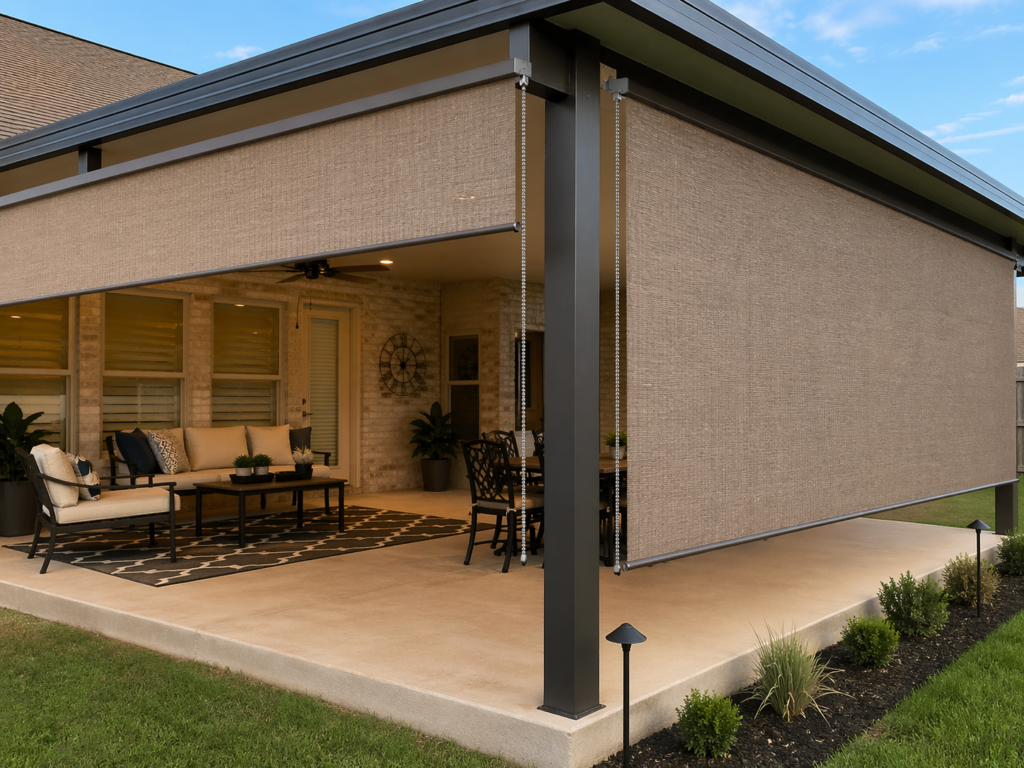
Manual exterior shades use a pull strap, cord, or crank to roll up and down. Simple. No power required.
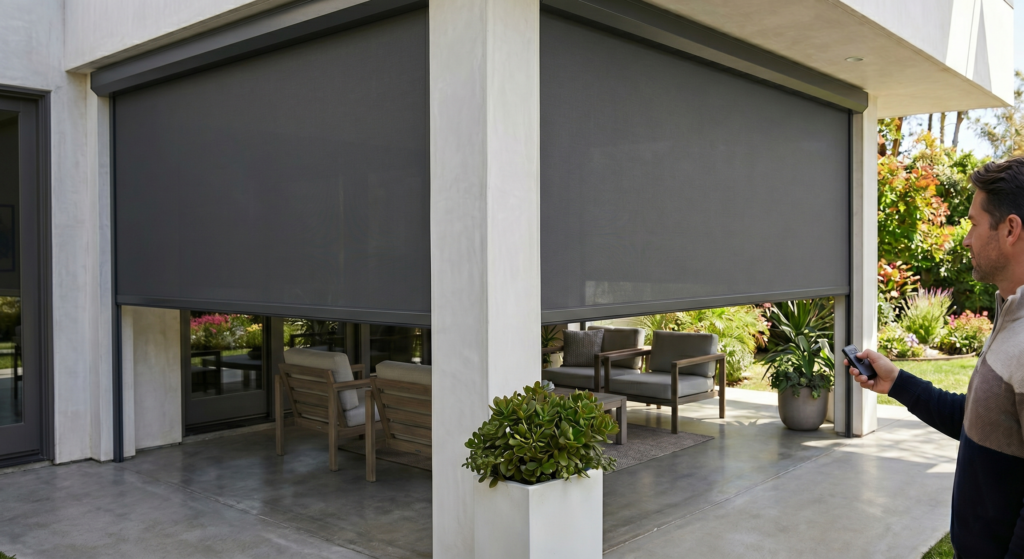
Motorized exterior shades use an electric motor — controlled by a wall switch, remote, or smart home app. Higher-end systems include sun and wind sensors that automate everything.
Why Sacramento Changes the Calculus
Sacramento averages over 265 sunny days per year. Your exterior shades aren’t a seasonal accessory — they’re a tool you’ll use constantly from April through October, and often into November.
Add in:
- Triple-digit heat days where you want shades down before you step outside, not after
- Delta winds that pick up fast and unexpectedly on summer afternoons
- Strong UV exposure that makes the difference between a comfortable patio and an unusable one
Sacramento homeowners who invest in exterior shades actually use their outdoor spaces. That’s the whole point. And how easy your shades are to operate directly affects how much you use them.
Motorized Exterior Shades: The Real Pros and Cons
Why Sacramento homeowners love them
True convenience. One button, one remote, or a voice command. You lower all your shades before guests arrive — from inside, in the AC. No going outside in 105-degree heat to pull cords. No wrestling with multiple manual shades across a large patio.
For patios with multiple shade panels, this is a game-changer. Manually operating four or five shades every time you want to use your patio gets old fast.
Wind sensor protection. This is the big one for Sacramento. The delta breeze can go from calm to 25+ mph in minutes on a summer afternoon. A wind sensor detects the gust and automatically rolls your shades up before they take damage. Manual shades have no such protection — if you’re not home, or you don’t notice in time, you risk bent frames or torn fabric.
Sun sensors and scheduling. Set your shades to lower automatically when the sun hits a certain angle, and raise at sunset. Your patio temperature manages itself. You walk outside and it’s already comfortable.
Smart home integration. Most quality motorized shade systems integrate with Alexa, Google Home, Apple HomeKit, or SmartThings. You can group all your outdoor shades into one scene, automate based on time or temperature, or tie them into your overall home automation setup.
Home value. In Sacramento’s competitive real estate market, motorized exterior shades are a visible, premium upgrade. They show well, they’re a talking point in showings, and buyers recognize the value.
The honest downsides
Requires power. You need an electrical connection at each motor location. In some patio setups, running power adds cost and complexity to installation.
More components. Motors, controls, and sensors are additional points of failure over the life of the product. A quality motor from a reputable brand should last 10–15+ years, but it’s a consideration.
Manual Exterior Shades: The Real Pros and Cons
Why they still make sense
Lower cost. A well-made manual exterior shade is a real, functional upgrade at a fraction of the price. For homeowners who want better sun control without the premium, manual shades absolutely deliver.
Simpler installation. No electrical work required. If your patio doesn’t have easy access to power, manual shades sidestep that problem entirely.
Reliable mechanism. Pull strap or spring roller systems are simple, time-tested, and easy to service. Less to go wrong.
Works anywhere. Side yard, detached pergola, covered patio with no outlets — manual shades don’t need infrastructure.
Where they fall short in Sacramento
You have to be there and remember. Wind picks up while you’re at work? Your shades stay down. Over time, sun and wind exposure without protection shortens the life of your fabric and hardware. With motorized, a sensor handles this automatically.
Friction kills habits. If using your patio requires walking out in the heat to pull down cords across multiple panels, you’ll do it less. That means you use your outdoor space less. The shades become decorative. This sounds small — it’s not.
Harder to manage multiple panels. One or two shades, manual is fine. Three, four, or more panels across a large patio? Manual operation becomes genuinely annoying and time-consuming.
No automation. You can’t schedule them, integrate them with your smart home, or set them to respond to conditions. Every operation is manual.
Side-by-Side Comparison
| Factor | Motorized | Manual |
|---|---|---|
| Ease of use | Button / app / voice | Pull strap or crank |
| Wind sensor protection | Auto-retract available | Manual only |
| Smart home compatible | Yes | No |
| Power required | Yes | No |
| Best for large patios | Yes | Gets cumbersome |
| Maintenance complexity | Moderate | Low |
| Best for | High-use patios, multiple panels, busy households | Budget-conscious, 1–2 panels, occasional use |
Which One Is Right for Your Sacramento Home?
Go motorized if:
- You use your patio regularly during summer
- You have multiple shade panels to operate
- You want wind sensor protection when you’re away from home
- You’re invested in smart home automation
- You want to maximize home value and outdoor living quality
Go manual if:
- Budget is the primary concern
- You have one or two panels on a smaller space
- Your patio use is occasional rather than daily
- You don’t have convenient power access at the installation point
- You prefer simplicity with no tech involved
What to Look for in Either Option (Sacramento-Specific)
Fabric openness factor. Exterior shade fabrics come in different openness percentages — 1%, 3%, 5%, 10%, 14%. Lower openness = more shade and heat blocking, less visibility through. For Sacramento’s intense summer sun, most homeowners find 3–5% hits the sweet spot. Full blackout is available for spaces where you want complete privacy and maximum heat control.
UV-resistant fabric. Look for solution-dyed polyester or fiberglass mesh designed for outdoor use. It needs to handle years of Sacramento UV exposure without fading or degrading.
Frame and hardware quality. Powder-coated aluminum is the standard for outdoor use. Avoid anything that’s going to corrode or warp after a few summers.
Wind rating. Ask specifically about wind load ratings, especially for motorized systems. Sacramento’s delta winds are real — you want a system built to handle them, not just tolerate them.
Warranty. Quality motorized systems should carry at least a 5-year warranty on the motor. Fabric warranties of 5–10 years are standard from reputable brands.
The Bottom Line for Sacramento Homeowners
For most Sacramento homeowners with a patio they actually use, motorized wins. The convenience factor is real — it changes how often you use your outdoor space. The wind sensor is genuinely valuable given our afternoon delta breezes. And on a large patio with multiple panels, manual operation goes from mildly inconvenient to genuinely frustrating fast.
That said, if you’re working with a smaller space, one or two panels, and a tight budget — a quality manual exterior shade is absolutely worth it. It beats no shade every summer.
Either way, don’t go cheap on the fabric or hardware. Sacramento summers are brutal. Low-quality exterior shades won’t survive more than a couple seasons.
Ready to Add a Retractable Awning to Your Sacramento Patio?
Whether you’re going motorized or manual, the right shade for your patio depends on your space, sun exposure, and how you use it.
We help Sacramento homeowners throughout the greater area — Elk Grove, Roseville, Folsom, Rancho Cordova, Fair Oaks, Citrus Heights, Granite Bay, and beyond — design outdoor spaces that are actually comfortable to use.

